

The pharmaceutical manufacturing industry is changing rapidly. With stricter regulatory requirements, increasing production complexity, and growing customer expectations, manufacturers can no longer rely on spreadsheets or generic ERP systems to manage their operations.
Whether you’re manufacturing tablets, capsules, injectables, syrups, APIs, nutraceuticals, cosmetics, or Ayurvedic products, every department—from production and quality control to inventory and finance—must work together seamlessly.
This is where a pharmaceutical ERP system becomes essential.
In this guide, you’ll learn what pharmaceutical ERP software is, the features every manufacturer should look for, common challenges it solves, and how to choose the right ERP solution for your manufacturing plant.
What is Pharmaceutical ERP Software?
A Pharmaceutical ERP (Enterprise Resource Planning) system is a centralized software platform designed specifically for pharmaceutical manufacturing companies. It integrates all critical departments into one system, enabling seamless data flow and better operational control.
Instead of maintaining separate software for production, quality assurance, inventory, accounts, purchasing, and sales, a pharmaceutical ERP connects every process through a single database.
A modern pharmaceutical ERP typically manages:
- Production Planning
- Batch Manufacturing Records (BMR)
- Batch Packing Records (BPR)
- Quality Assurance (QA)
- Quality Control (QC)
- Inventory Management
- Warehouse Management
- Purchase Management
- Sales & Distribution
- Accounting & GST
- Batch Traceability
- Regulatory Compliance
This integration eliminates duplicate data entry, reduces manual errors, and provides management with real-time visibility into every stage of manufacturing.
Why Pharmaceutical Manufacturers Need ERP
Many pharmaceutical companies begin with Excel spreadsheets, manual registers, or generic accounting software. While these tools may work for small operations, they quickly become a bottleneck as production scales.
Some of the most common operational challenges include:
- Manual Batch Manufacturing Records that consume valuable production time.
- Difficulty tracing batches during product recalls or regulatory audits.
- Delays in QA and QC approvals due to disconnected systems.
- Inventory shortages caused by inaccurate stock visibility.
- Duplicate data entry across production, warehouse, accounts, and sales.
- Lack of real-time production dashboards.
- Slow document retrieval during WHO-GMP or Schedule M inspections.
An ERP system addresses these challenges by centralizing data and automating routine workflows.
Essential Features Every Pharmaceutical ERP Should Include
Choosing the right ERP is about more than billing or inventory. A pharma-focused ERP should support the industry’s operational and compliance requirements.
| Feature | Business Benefit |
|---|---|
| Batch Traceability | Quickly trace raw materials and finished goods during audits or recalls. |
| eBMR / eBPR | Reduce paperwork and standardize manufacturing documentation. |
| Production Planning | Improve scheduling and optimize resource utilization. |
| QA & QC Management | Manage approvals, inspections, and quality workflows efficiently. |
| Inventory Management | Monitor stock levels in real time across warehouses. |
| Barcode Integration | Improve accuracy during material issuance and dispatch. |
| Multi-Warehouse Support | Track inventory across multiple locations. |
| Batch Costing | Analyze production costs batch by batch. |
| GST & Accounting | Simplify financial operations and statutory compliance. |
| Dashboards & Reports | Make faster decisions using live operational data. |
Common Problems Without an ERP
Manufacturers operating without an integrated ERP often face recurring challenges:
- Paper-based batch records increase the risk of human error.
- Batch history is difficult to retrieve during audits.
- Production planning depends on spreadsheets and manual coordination.
- Inventory discrepancies lead to production delays.
- Duplicate entries across departments reduce efficiency.
- Management lacks real-time operational visibility.
- Compliance documentation is scattered across files and registers.
As production volumes increase, these issues become more expensive and difficult to manage.
Comparing ERP Solutions for Pharmaceutical Manufacturing
Different ERP systems serve different needs. Generic ERP platforms may require extensive customization before they fit pharmaceutical manufacturing workflows.
| ERP Solution | Pharma Focus | Batch Traceability | QA/QC | Mobile Access | Customization |
|---|---|---|---|---|---|
| FINAMAN ERP | Yes | Yes | Yes | Yes | Extensive |
| SAP ERP | Broad manufacturing | Available | Available | Yes | Extensive |
| Oracle ERP | Broad manufacturing | Available | Available | Yes | Extensive |
| Generic ERP | Limited | Limited | Limited | Varies | Limited |
The best choice depends on your company’s size, manufacturing processes, regulatory needs, implementation resources, and budget.
Why Consider FINAMAN ERP?
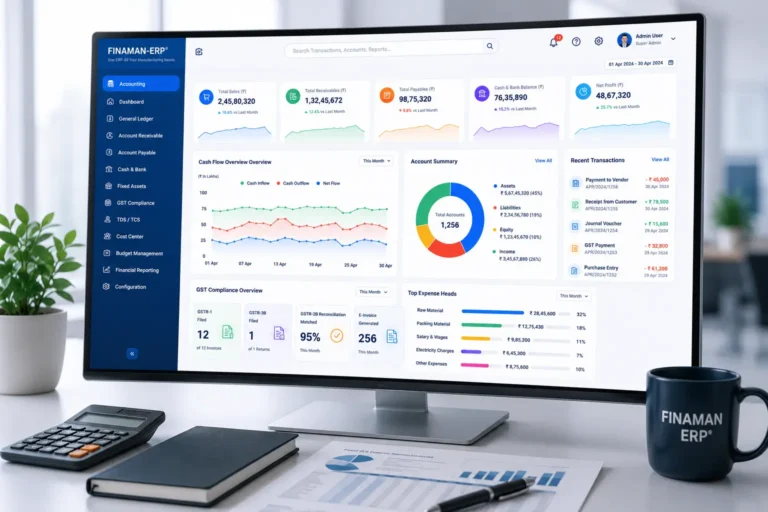
FINAMAN ERP has been designed with manufacturing operations in mind, including pharmaceutical workflows.
Key capabilities include:
- Production Planning
- Batch Manufacturing Records (BMR)
- Batch Packing Records (BPR)
- Batch Traceability
- QA & QC Management
- Inventory & Warehouse Management
- Barcode Integration
- Vendor Approval
- Formula Management
- Batch Costing
- GST Compliance
- Tally Integration
- WhatsApp & Email Notifications
- Management Dashboards
By integrating these processes into one platform, manufacturers can reduce manual work and improve operational visibility.
Industries Supported
Although designed for pharmaceutical manufacturing, FINAMAN ERP also supports:
- Cosmetics & Personal Care
- Nutraceuticals
- Ayurvedic Manufacturing
- API & Bulk Drug Manufacturing
- Food & Beverage Manufacturing
- Chemicals
- Plastics & Rubber
Frequently Asked Questions
What is a pharmaceutical ERP?
A pharmaceutical ERP is software designed to integrate production, quality, inventory, finance, purchasing, and compliance processes into a single platform.
Can ERP replace Excel?
Yes. ERP systems reduce manual spreadsheet work by storing operational data in one centralized system.
Does ERP help during WHO-GMP audits?
A pharma-focused ERP can make documentation easier to organize and retrieve, which can support audit preparation.
Can ERP manage Batch Manufacturing Records?
Yes. Many pharmaceutical ERP solutions support electronic or automated management of Batch Manufacturing Records (BMR) and Batch Packing Records (BPR).
Is barcode integration important?
Barcode integration helps improve inventory accuracy and material tracking throughout manufacturing.
Can ERP integrate with accounting software?
Many ERP solutions, including FINAMAN ERP, support integration with accounting workflows such as GST processes and Tally.
Conclusion
Modern pharmaceutical manufacturing requires more than disconnected software and spreadsheets. As compliance requirements grow and production becomes increasingly complex, manufacturers benefit from systems that connect departments, improve visibility, and reduce manual work.
When evaluating ERP software, focus on solutions that align with your manufacturing processes, quality requirements, and long-term growth plans.
If you’re exploring ERP solutions for pharmaceutical manufacturing, a live demonstration can help you understand how the system fits your workflow.
👉 Schedule a free FINAMAN ERP demo to see how production, quality, inventory, purchasing, warehouse, and accounting can work together on one integrated platform.